| | Whynot Studio
Edition 18, June 2026 |
|
Hi Paul,
What an adventure! We've just completed the return trip from Tasmania, travelling a shade under 9,500 km over the last 2 and a half months.
Read on to hear about surviving an Antarctic blast in the Tarkine wilderness on Tassie's wild north west, travelling the beautiful Bay of Fires on the east coast, caretaking the spectacular Cape Bruny Lighthouse and making art along the way.
We also stopped in at the new National Centre for Environmental Art in the Grampians in western Victoria.
So much inspiration for our next exhibition!
All the best,
Paul
|
|
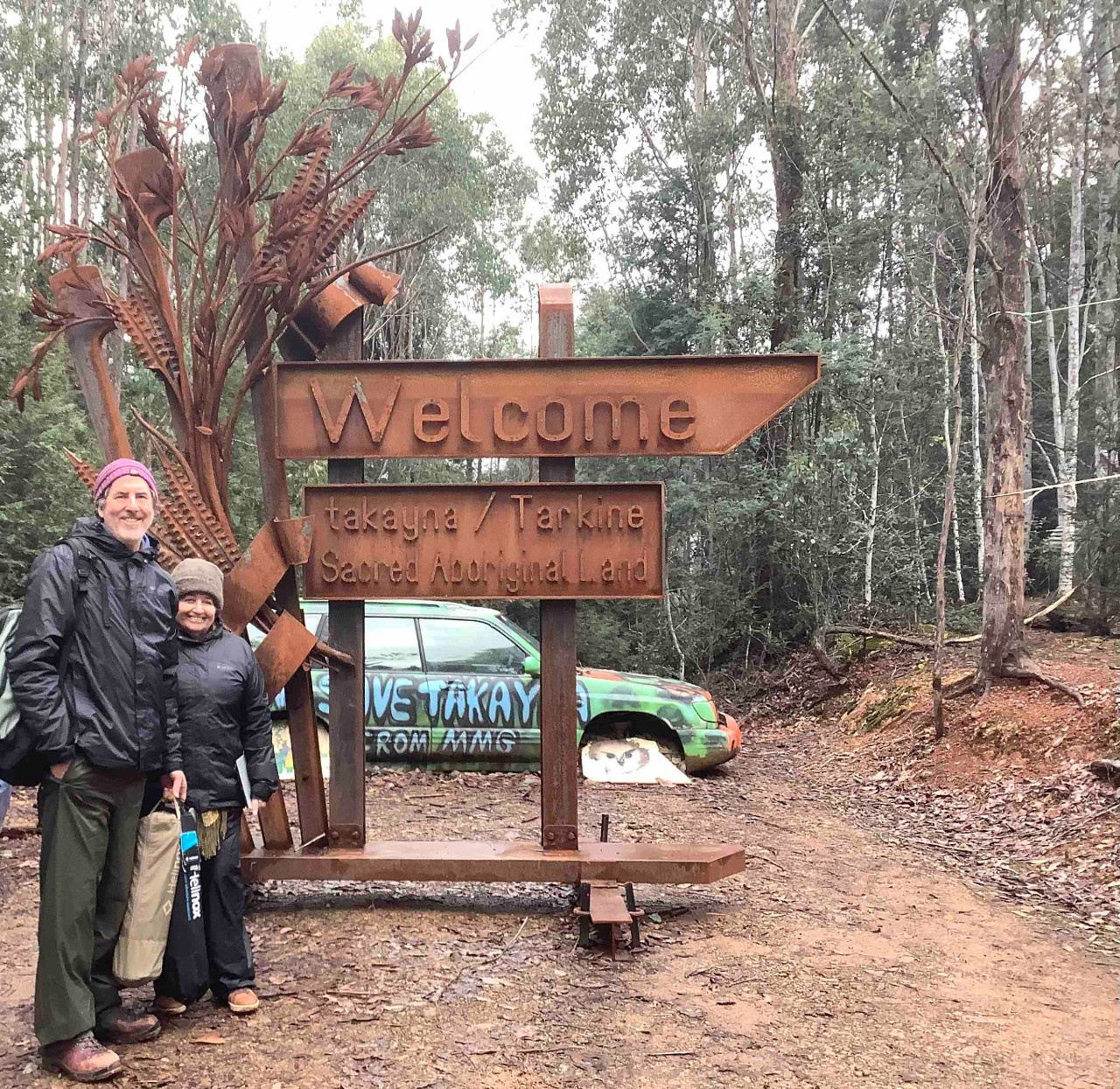
Takayna (the Tarkine wilderness) |
|
Tasmania's west coast has a reputation for wild weather so we were delighted to find clear skies, mild days and light winds when we arrived in the township of Waratah on the edge of the Tarkine wilderness. We walked around the parks and lakes in this tiny historic former mining town and were thrilled to see a platypus in broad daylight swim up to the bridge to check us out, then continue its fossicking around in the shallows.
However, the beautiful weather was not to last. Tasmania periodically experiences what the weather bureau calls 'Antarctic blasts'. The term tells you all you need to know. Just in time for us to venture into the Tarkine forests came the wind, rain and snow. Not ideal conditions in which to paint and draw! |
|
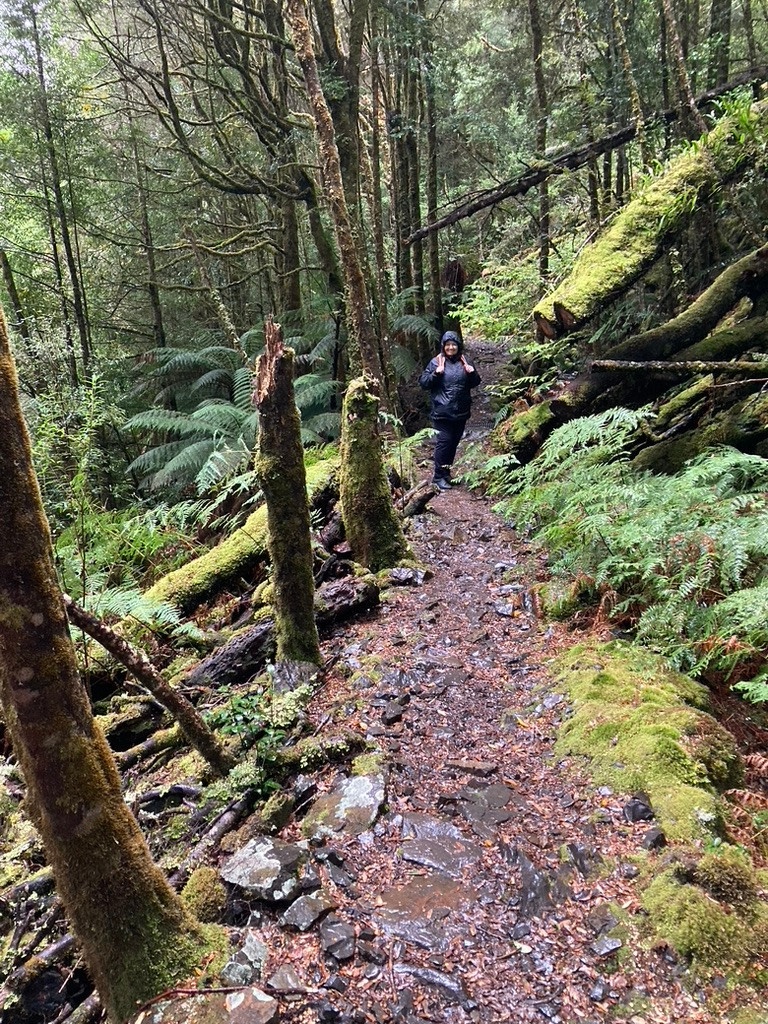
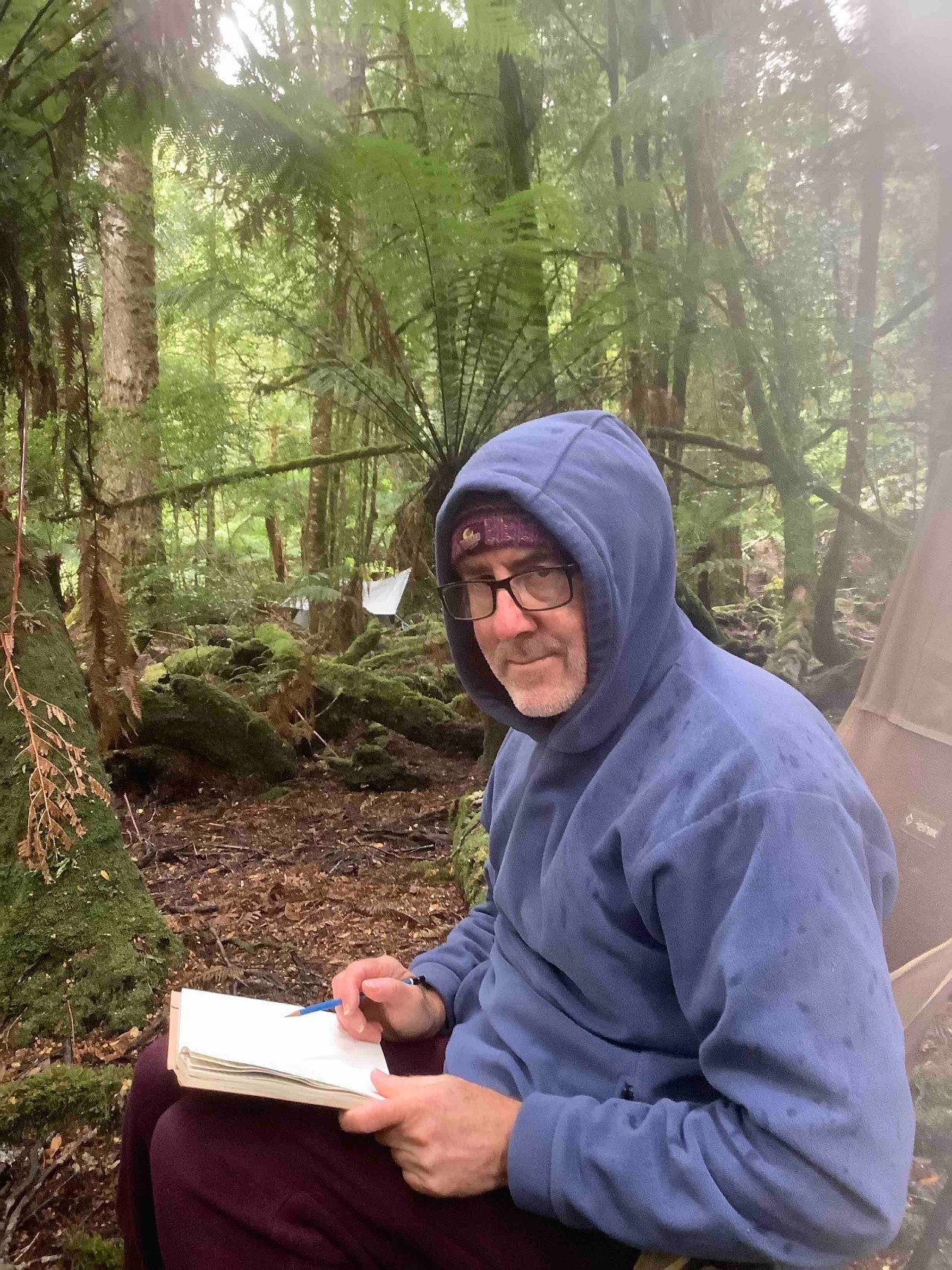
Lyn was dressed for the cold, wet weather. Even when it wasn't raining above the forest canopy, everything was dripping wet. |
|
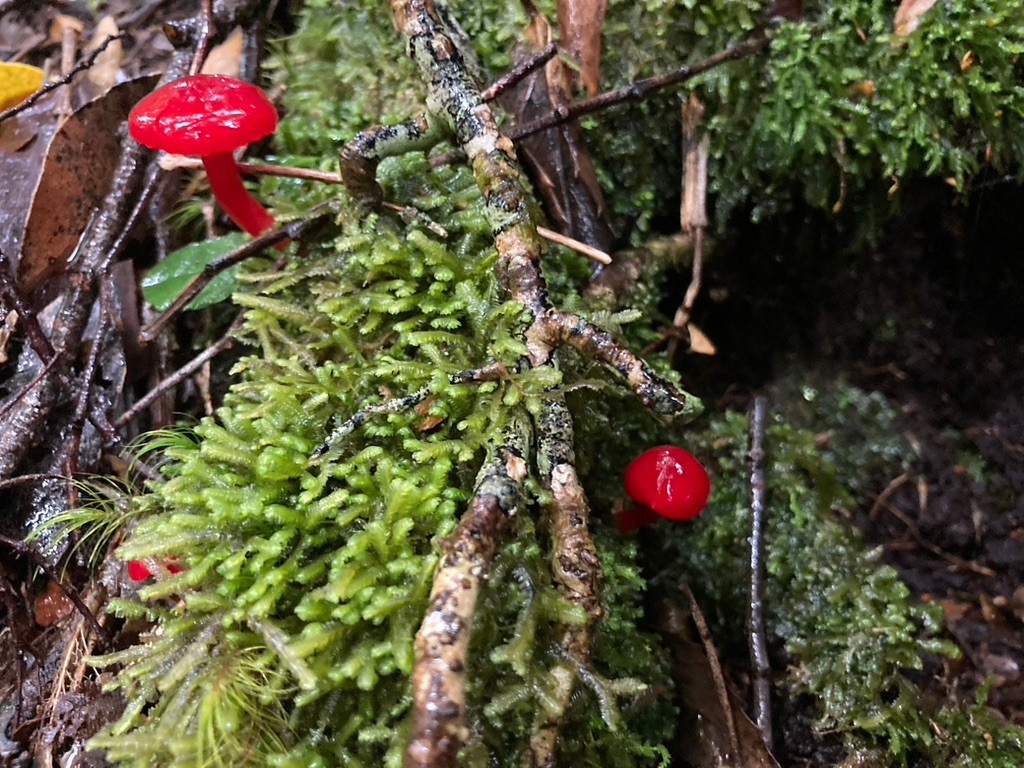
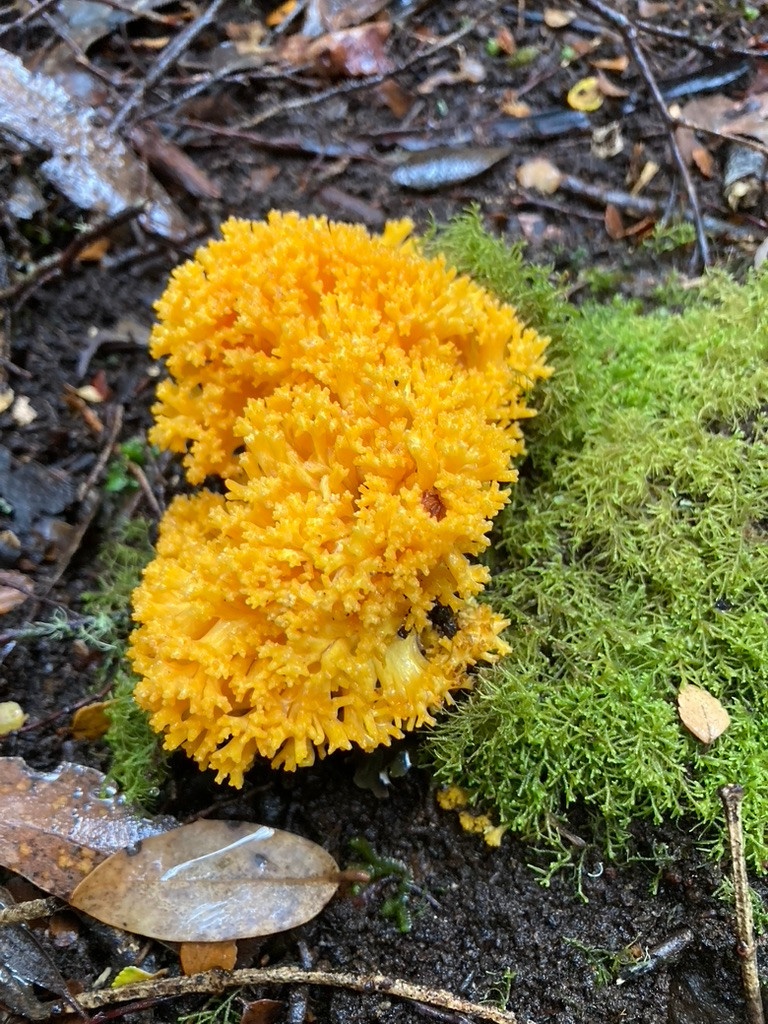
The forest is full of the most beautiful and diverse fungi, mosses, ferns and lichens. |
|
The fight for the Tarkine |
|
The Tarkine is the largest intact cool temperate rainforest in Australia and the second largest in the southern hemisphere. To be awarded World Heritage status, an area must possess at least 1 of 9 criteria. The Tarkine possesses 7. Yet, incredibly, the Tarkine doesn't have World Heritage listing and isn't even a national park. Instead it's being clear-felled and mined and there are plans to expand both.
Each year the Bob Brown Foundation organises a program to take artists into the Tarkine, guided by ecologists and forest defenders, to raise awareness and appreciation of what is being lost.
For years, the forest defenders have waged a brave struggle in incredibly difficult conditions, camping out in wet, freezing weather, blockading access roads, locking on to machinery and staging tree-sits to prevent the loggers and miners destroying the forest. That so much forest still stands is testimony to their boundless courage, strength and determination.
You can find out more about the fight for the Tarkine here. |
|
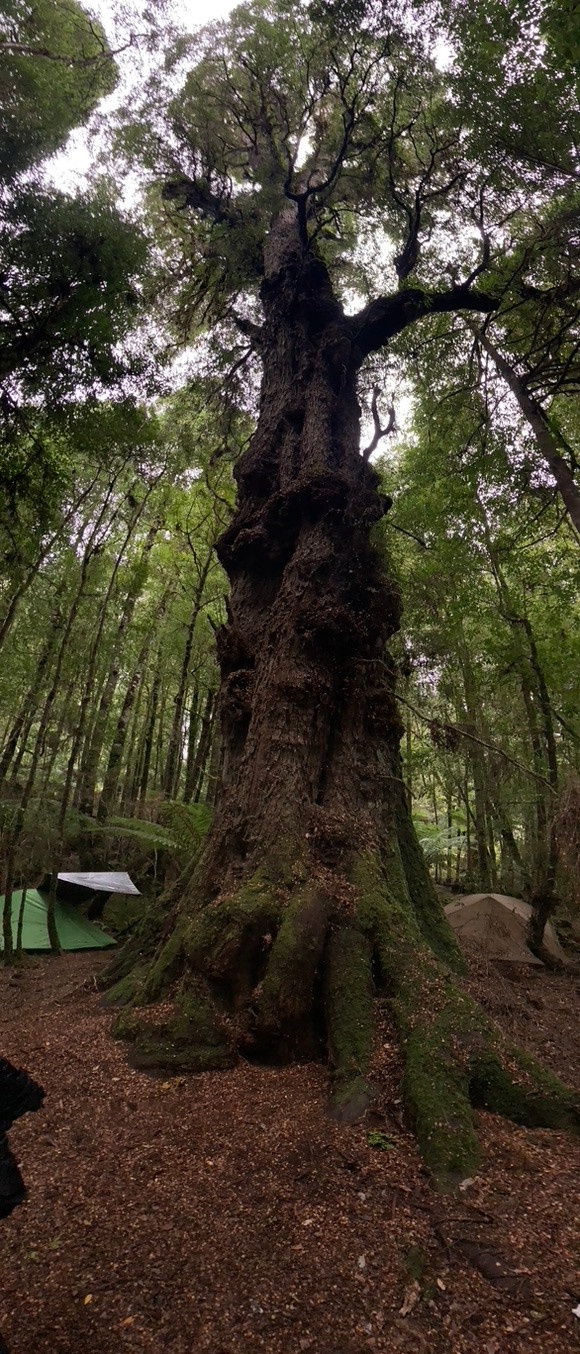
One of the forest defenders' camps we visited was McKimmies. This camp successfully defended an area slated for clear-fell logging, including the centuries-old giant Myrtle Beech pictured below. |
|
The scale of the forest, the diversity, the myriad shades of green, the gloomy light, let alone the freezing cold and rain, made it very hard to decide what to paint and how to paint it.
Given the conditions, Lyn and I confined ourselves to making sketches and taking plenty of reference photos, with plans to do our paintings for the Art 4 Takayna exhibition later when we were at Cape Bruny. |
|
After spending a week in the Tarkine, we drove across the north of Tasmania to St Helens on the east coast. We drove through mile after mile of timber plantations, giving the lie to the claim that the timber industry must keep logging native forests. Plantations can supply all the timber they need.
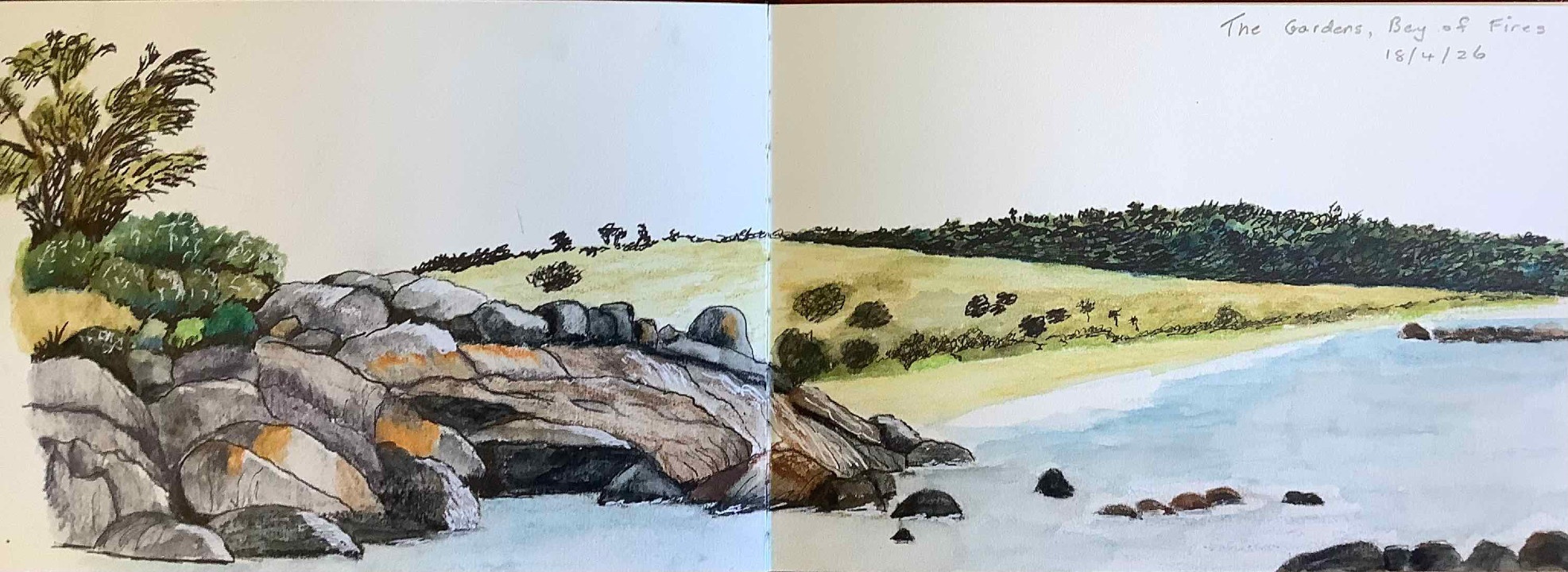
St Helens is a beautiful estuary at the southern end of the spectacular Bay of Fires region. We spent days painting and drawing in lovely weather. Amazing orange lichen covers the boulders on the shoreline. Many people think this is what gave the Bay of Fires its name but, actually, the name came from the many camp fires of Aboriginal people seen by passing ships. |
|
The Gardens by Lyn Graham, artist's journal |
|
From St Helens, we headed south to Cape Bruny lighthouse for our 6-week caretaker posting.
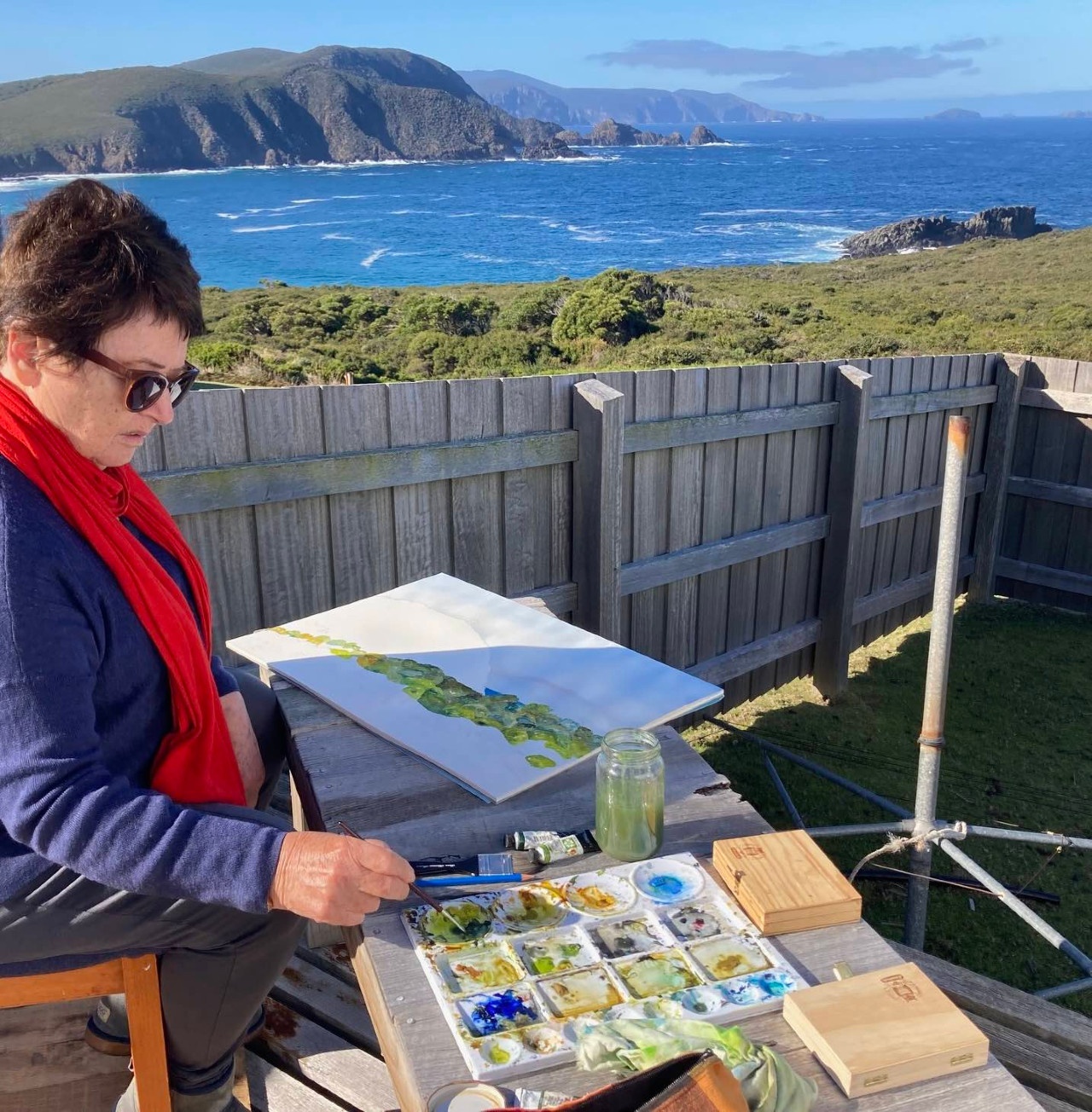
The weather gods smiled on us for most of our stay, meaning we could get out and about most days to paint and draw in our journals. We also set up a studio inside our cottage where we could work when the weather turned wild. Lyn enjoyed painting on an old tank stand in our backyard, looking down on Lighthouse Bay. |
|
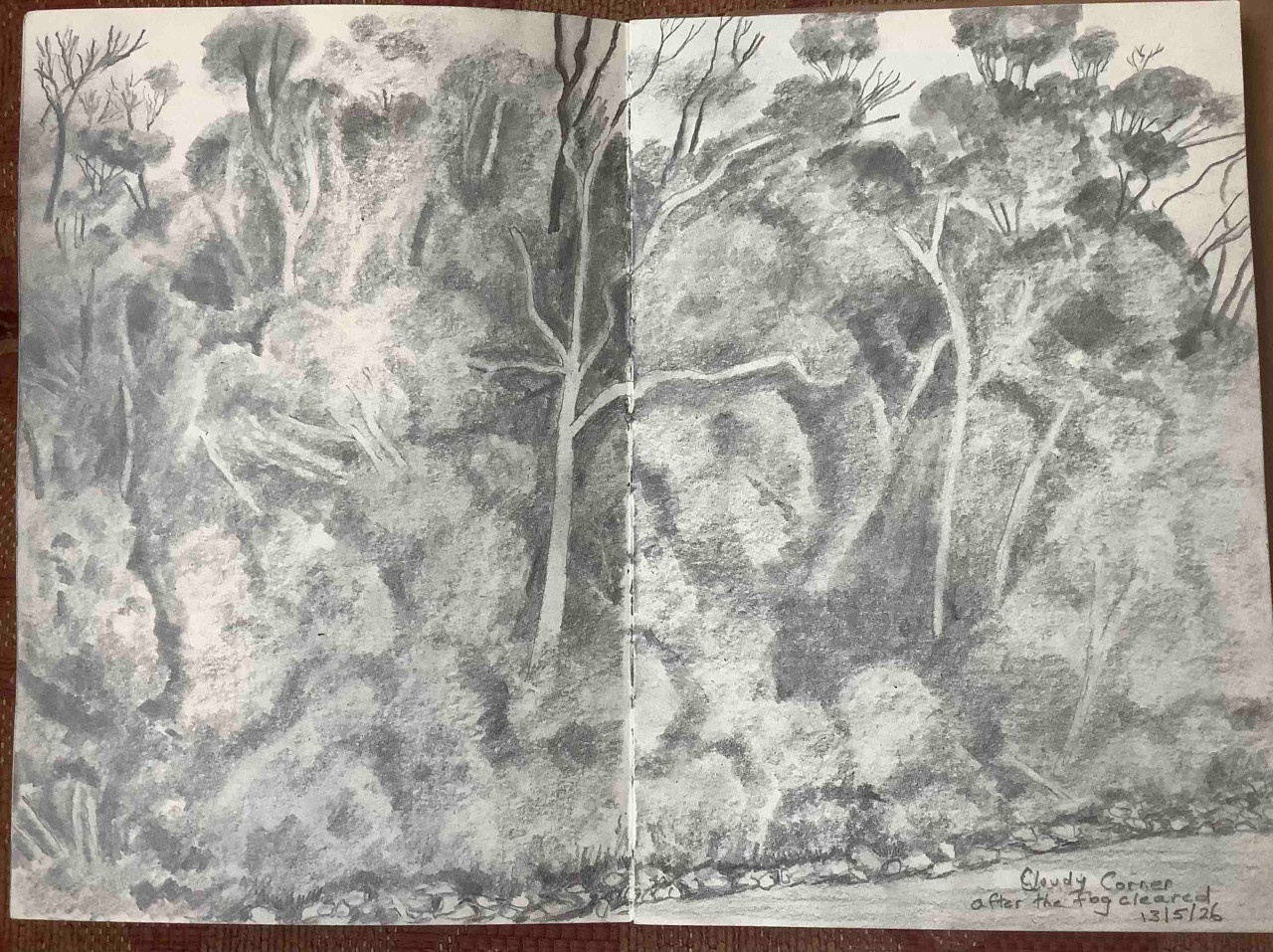
Cloudy Corner by Lyn Graham, artist's journal |
|
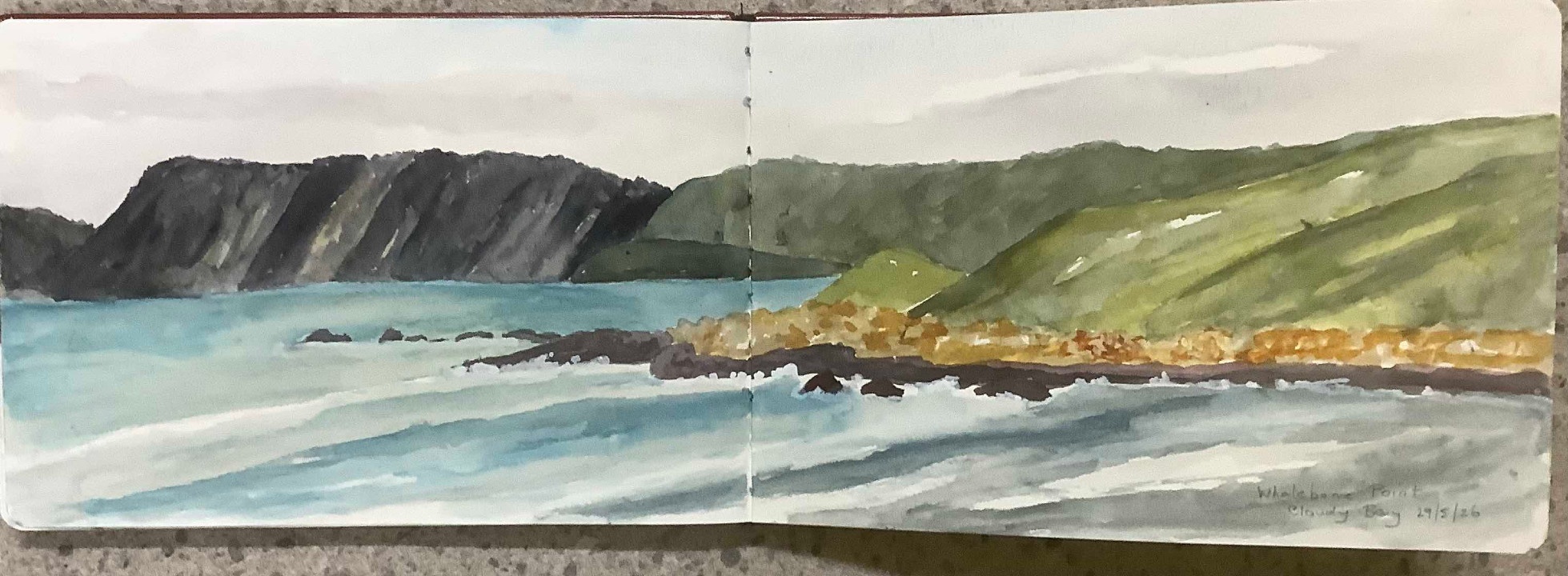
Whalebone Point by Lyn Graham, artist's journal |
|
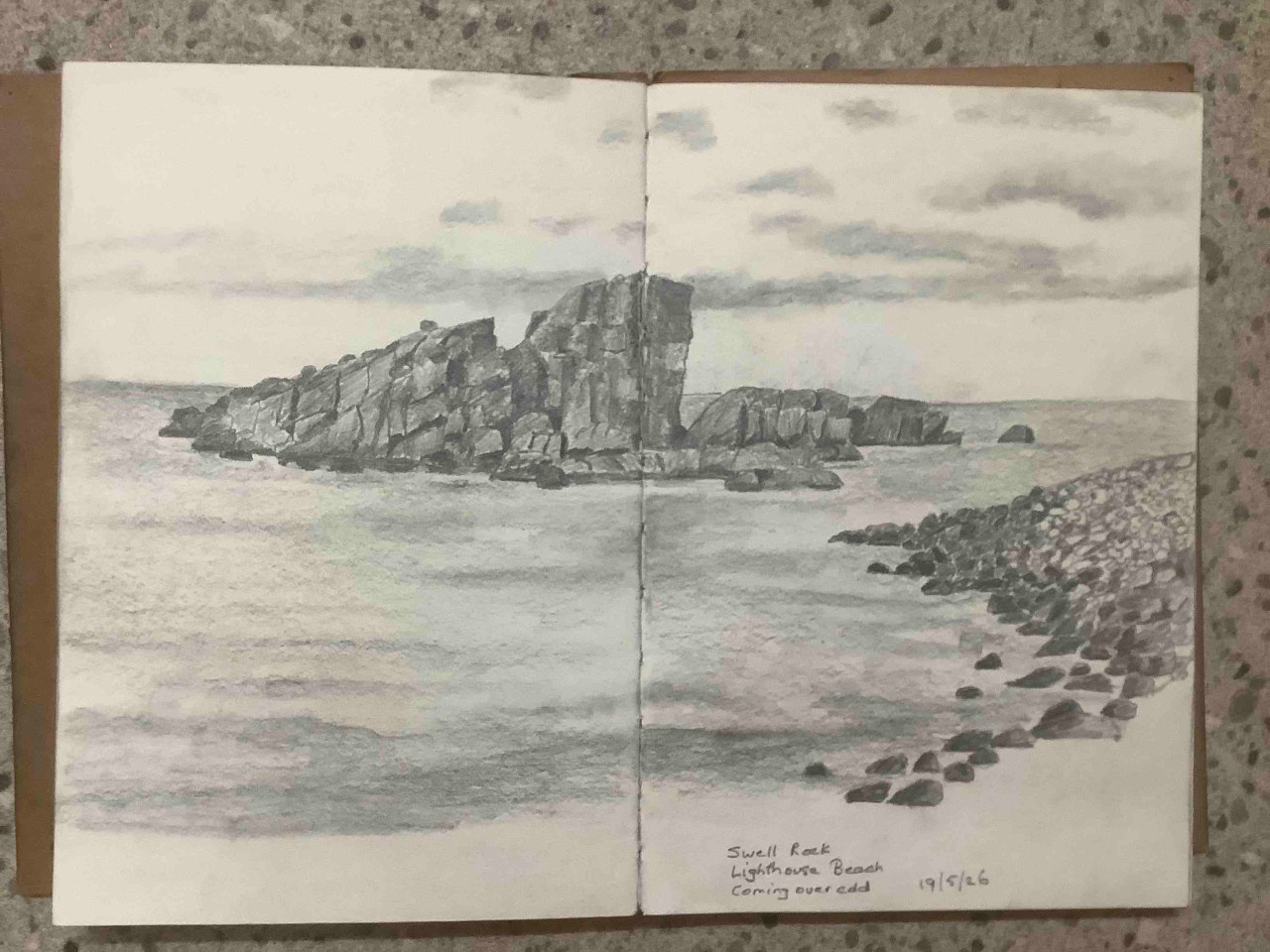
Swell Rock by Lyn Graham, artist's journal |
|
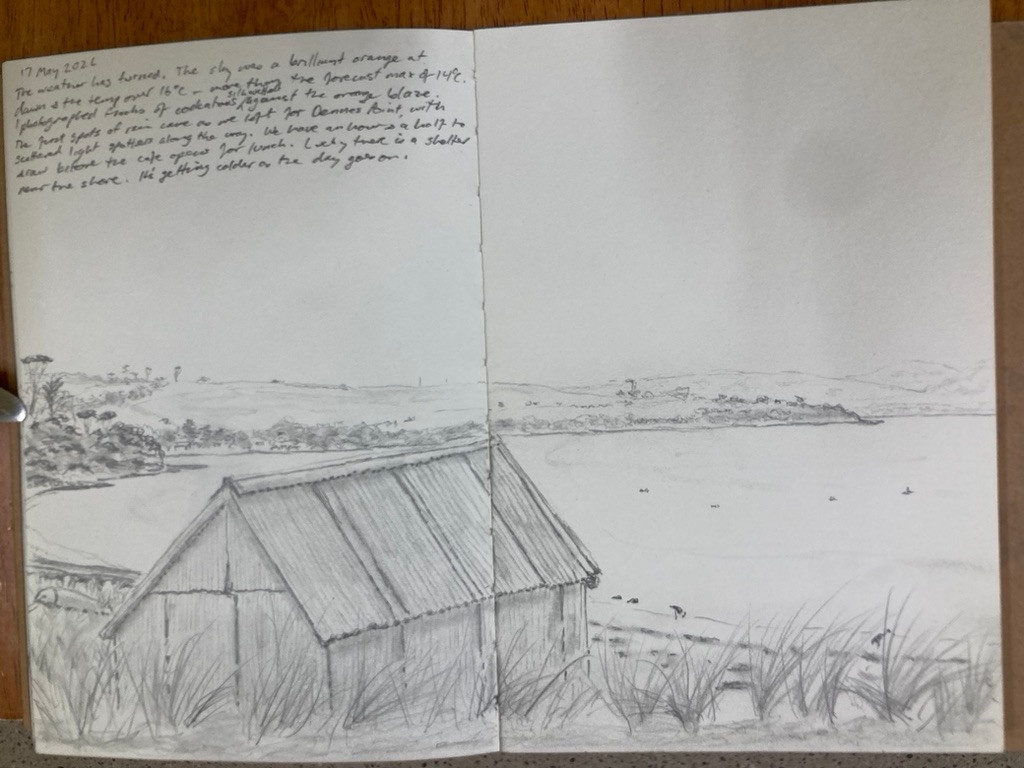
Dennes Point by Paul Rees, artist's journal |
|
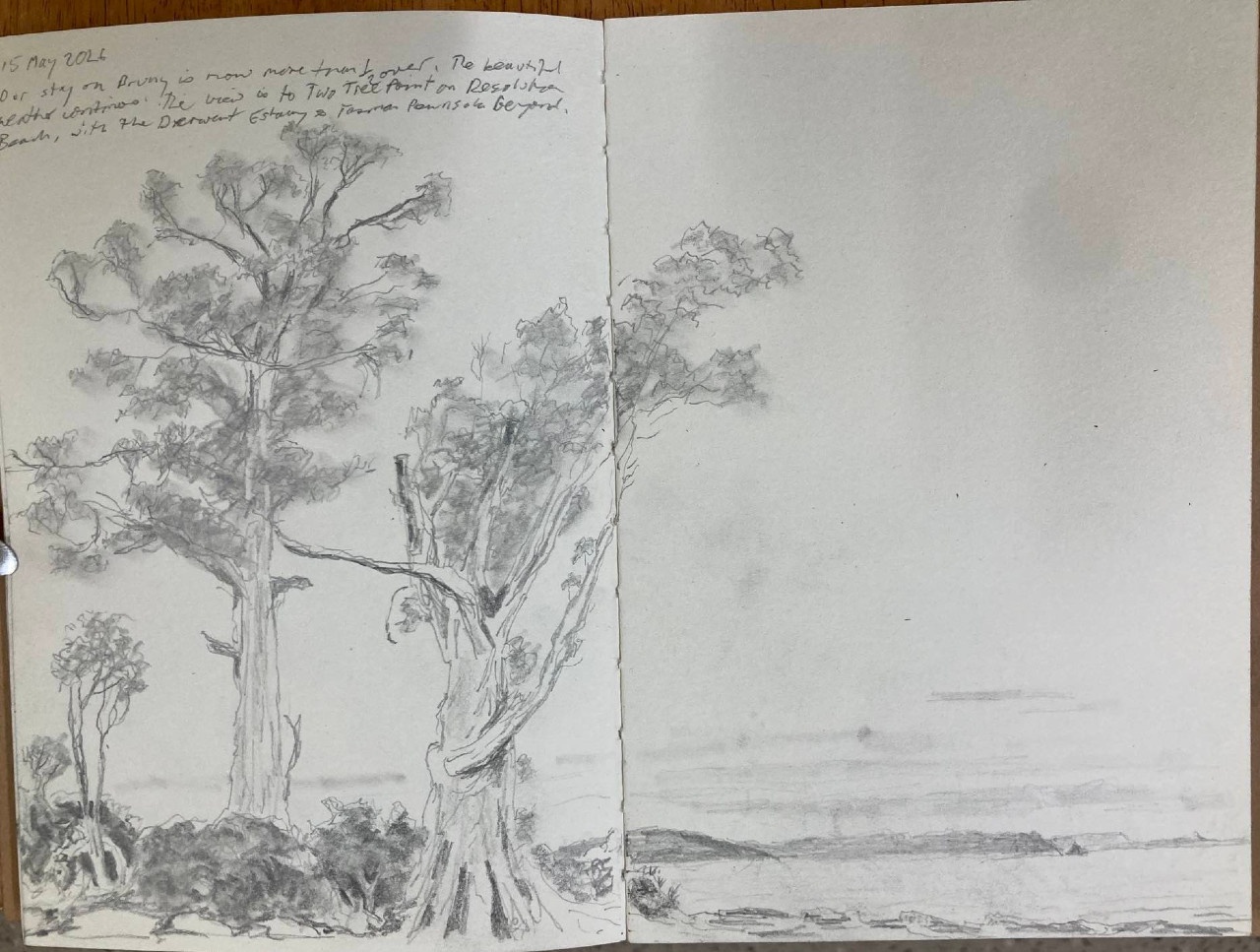
Two Tree Point by Paul Rees, artist's journal |
|
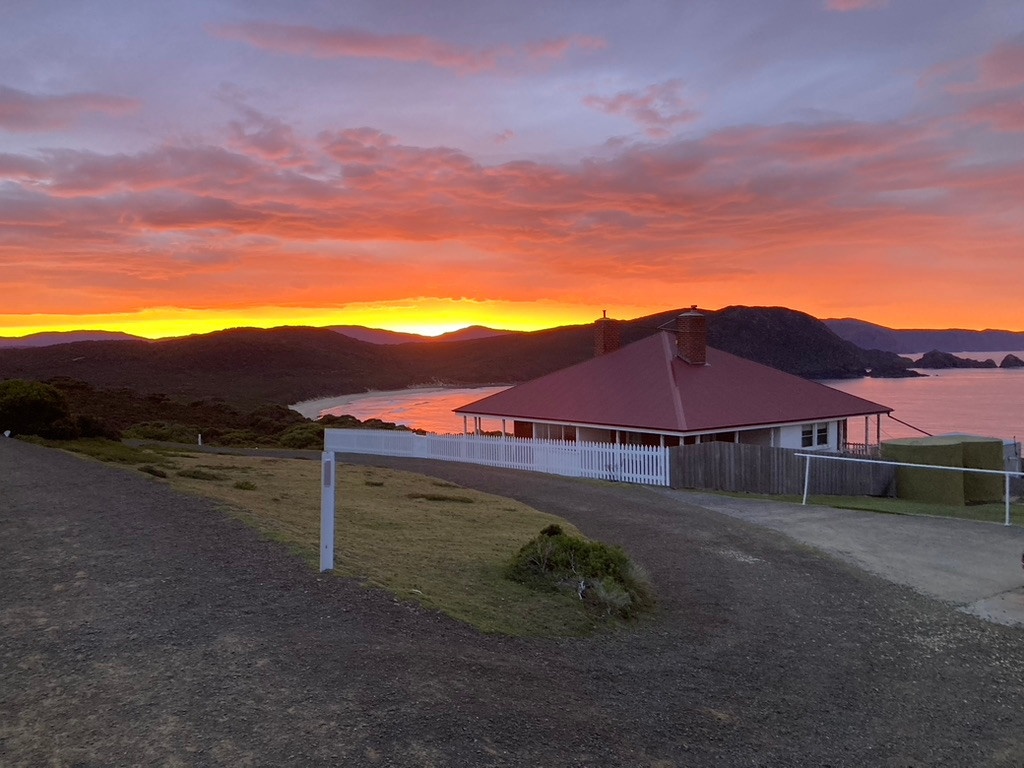
Every day is beautiful at Cape Bruny but this dawn was hard to beat. |
|
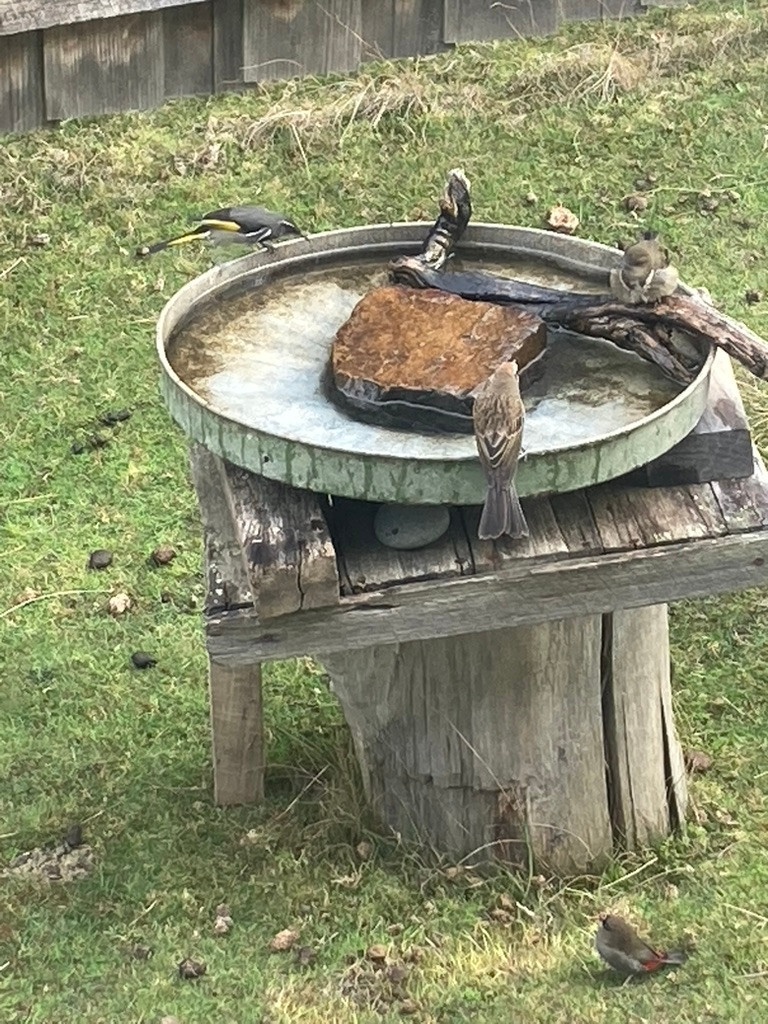
The birdlife is amazing. I recorded 48 species while on Bruny. Large flocks of yellow-tailed black cockatoos feasted on banksia flowers. There were constant visitors to the birdbath outside our kitchen window. Here crescent honeyeaters and a tawny-crowned honeyeater prepare for a dip, while a beautiful firetail looks up from the ground. |
|
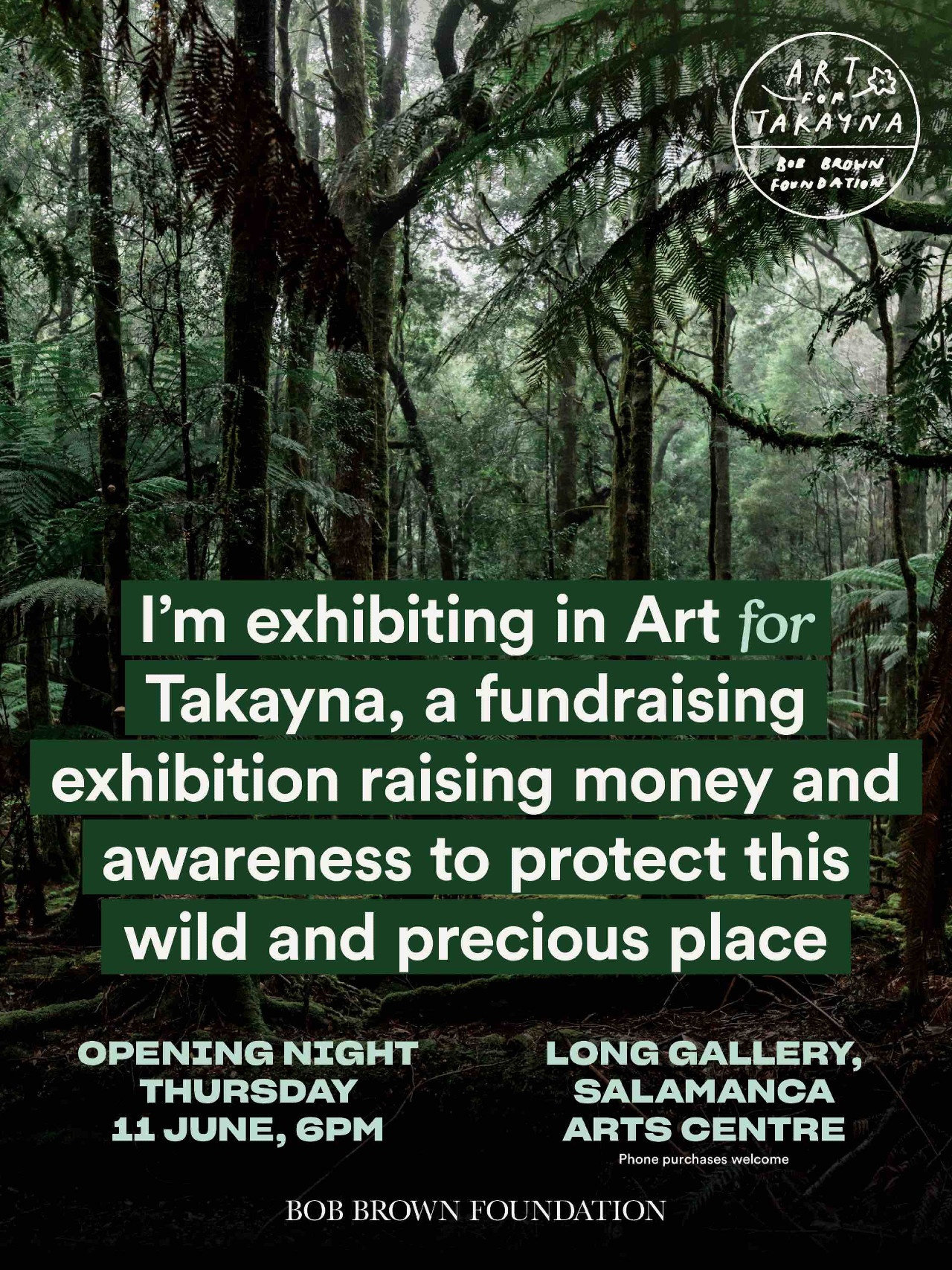
This year's Art 4 Takayna exhibition was the biggest yet, with more than 700 people attending opening night. |
|
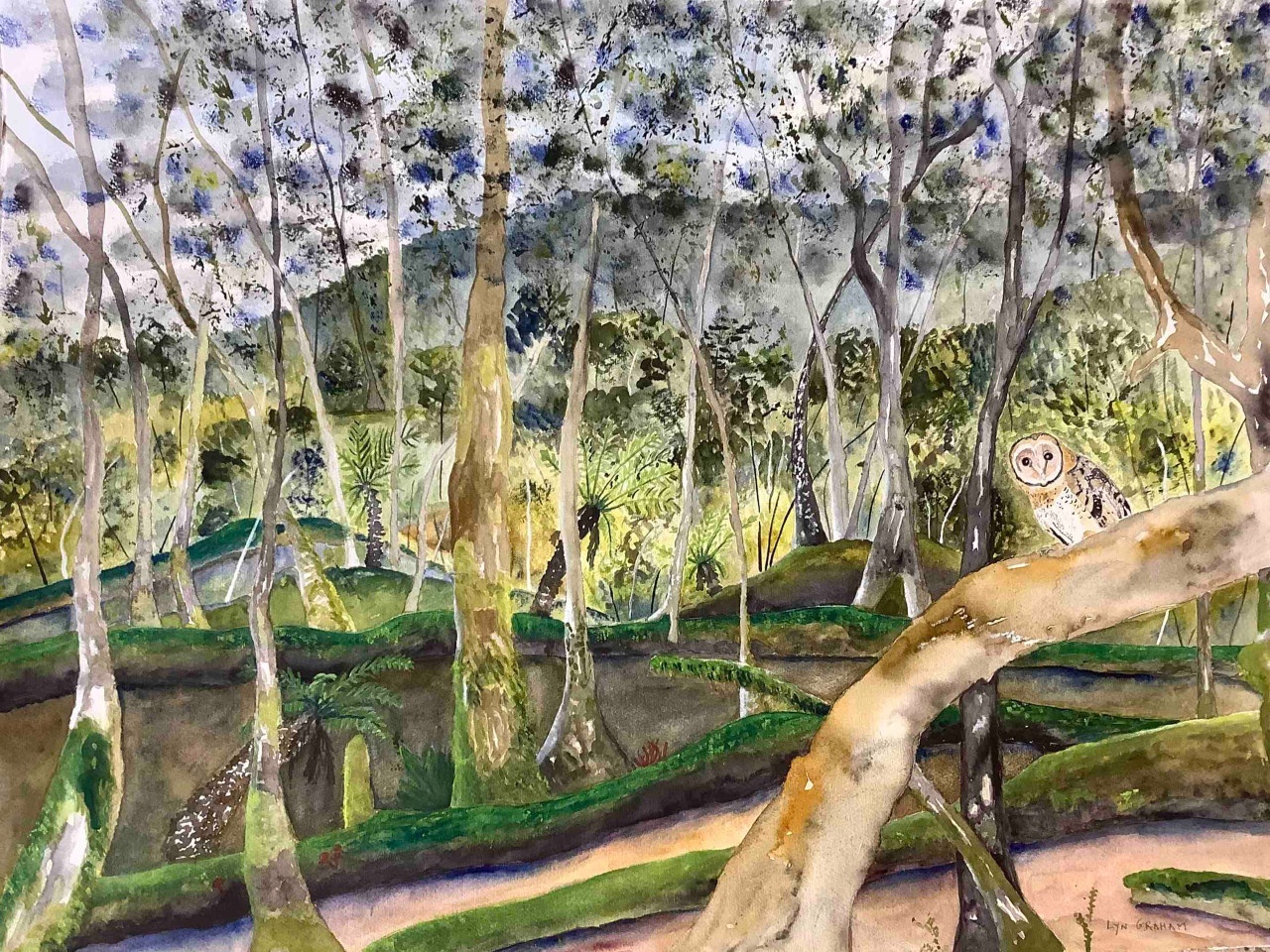
Lyn contributed two large watercolours to the exhibition: 'I hunt in the forest' which features the endangered masked owl and 'I hunt on the heathlands', which depicts the Tasmanian wedge-tailed eagle. |
|
I hunt in the forests by Lyn Graham, watercolour on 640 gsm cotton paper, 76 cm x 56 cm |
|
I hunt on the heathlands by Lyn Graham, watercolour on 640gsm cotton paper, 76 cm x 56 cm |
|
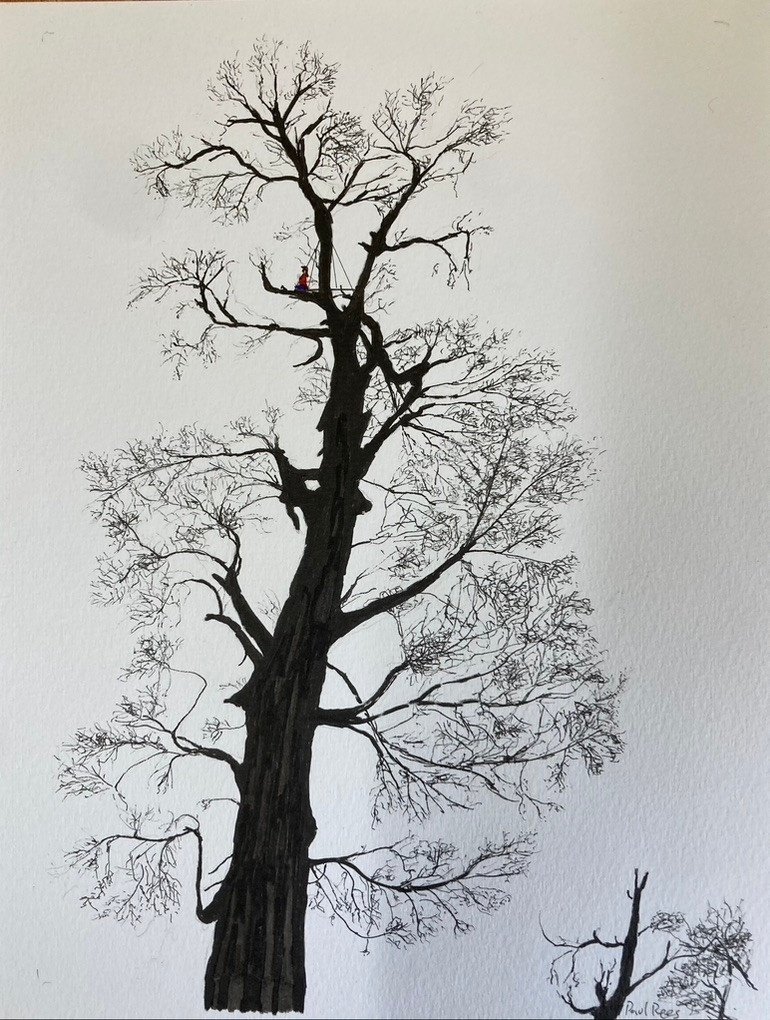
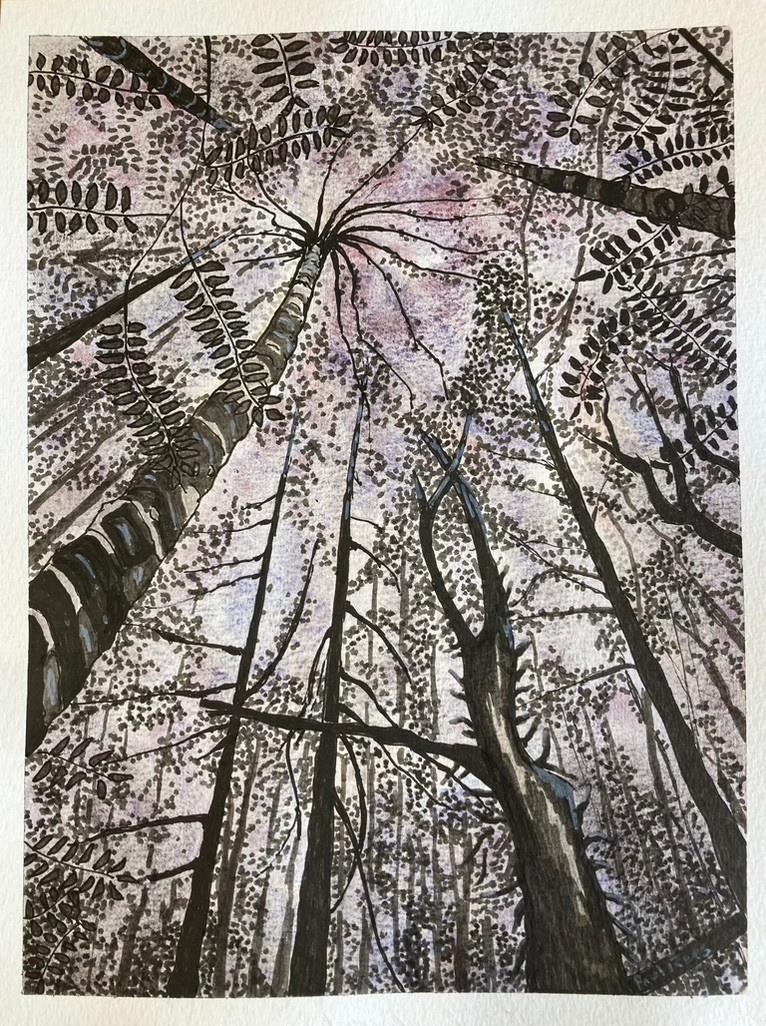
Here are 2 of the 3 pieces I contributed. |
|
Forest Defender by Paul Rees, pen on paper, 32 cm x 24 cm |
|
Sassafras in Starlight by Paul Rees, watercolour on paper, 32 cm x 24 cm |
|
Other Tarkine paintings we completed may feature in our next joint exhibition, along with new works inspired by the Tarkine residency.
Please let me know if you are interested in viewing any of our other Tarkine paintings. Proceeds will go to the Bob Brown Foundation. |
|
WAMA National Centre for Environmental Art |
|
On our way back from Tasmania, we visited the WAMA Foundation's National Centre for Environmental Art near Halls Gap in the Grampians in western Victoria.
The centre includes a gallery, cafe and gift shop as well as beautiful gardens featuring species endemic to the Grampians, some critically endangered.
The current exhibition was of art inspired by the fungi kingdom, in all its fantastic and bizarre forms.
We would highly recommend a visit to anyone who finds themselves in this part of the world. |
|
Share what's new in Whynot Studio If you like what you see, please forward this newsletter to anyone who might be interested and encourage them to subscribe.
You can see more of our art on our website.
Please get in touch if you would like to purchase some original art, would like to organise a private showing or want more info. |
|
|
| |
| |
|